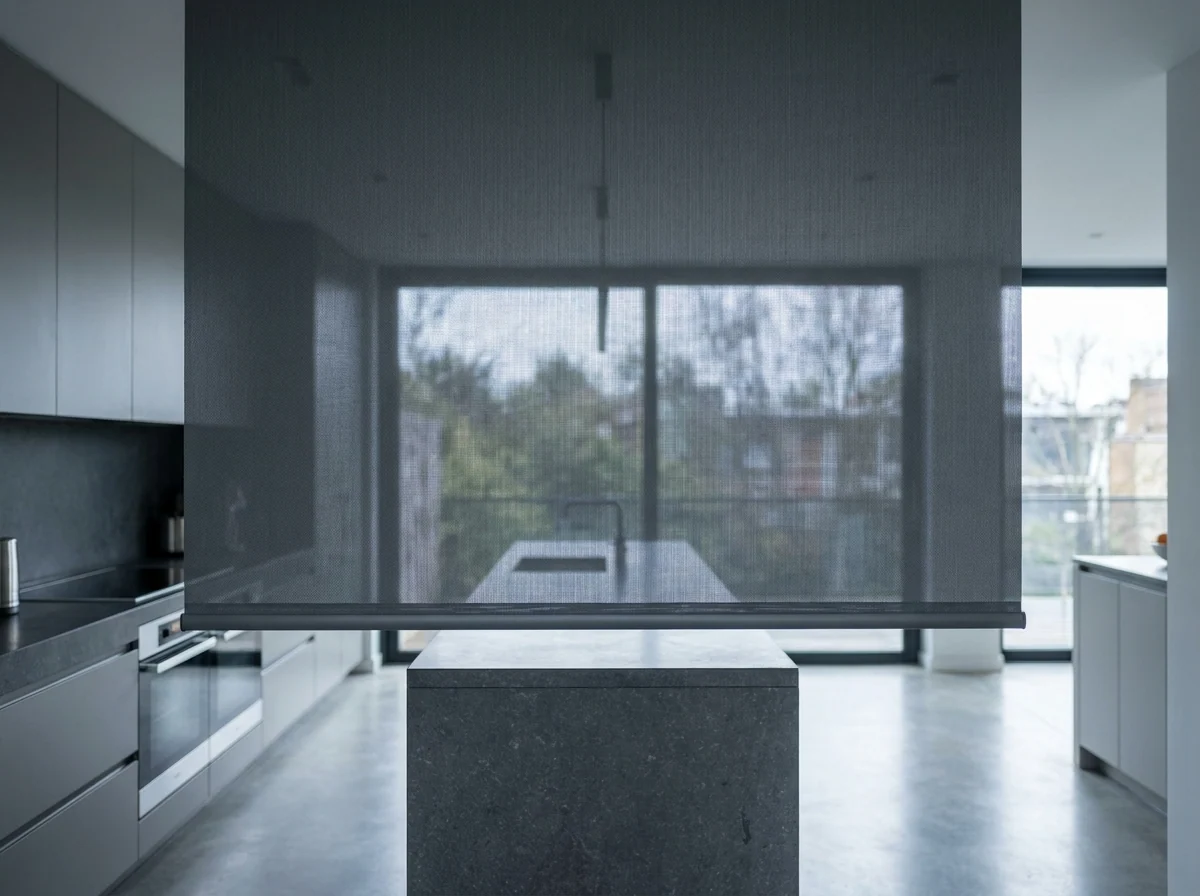
The everyday answer for new-estate glass — sunscreen where the view matters, blockout where it doesn't need to get in at all.
Sunscreen roller on the main glass — glare cut, the garden still there.
01
Two fabrics, two jobs
Sunscreen fabric (in 3%, 5% or 10% openness) cuts glare and UV while keeping the garden or fairway visible through the weave — the lower the percentage, the more heat and glare it stops, at the cost of a little view. A 3–5% weave is the standard choice for the big glass most Ruimsig homes are built around.
Blockout fabric does the opposite job: total dark for bedrooms, nurseries and media rooms, plus a genuine insulating layer against Highveld summer heat and winter cold. It's the fabric to reach for anywhere the goal is "no light at all," not "less light."
02
Double roller, one bracket
Most bedrooms with a garden or street-facing view end up running a double roller — blockout for night, sunscreen for day, on the same headrail. It's the practical middle ground between wanting the light and wanting to actually sleep in.
03
Control options
Chain control with a wall-anchored tensioner as standard, spring-assist for a lighter action, or fully motorised for wide or hard-to-reach windows — see our note on motorised automation for linked, multi-blind runs across a stacking-door wall.
Suits big glass walls and stacking doors as well as smaller bedroom windows
Fabric range runs from entry weaves through to premium sunscreen fabrics
Cassette or pelmet valances hide the tube, fascia colour-matched to your frames
One honest limit
Very wide spans — beyond roughly 3m of unbroken fabric — need either a central join line or a second, linked blind. Estate homes with heritage-style detailing sometimes suit a timber venetian better than a roller.
From Eagle Canyon's fairway-facing glass to Constantia Kloof's older window openings, sunscreen and blockout rollers are the everyday answer on almost every street we measure.